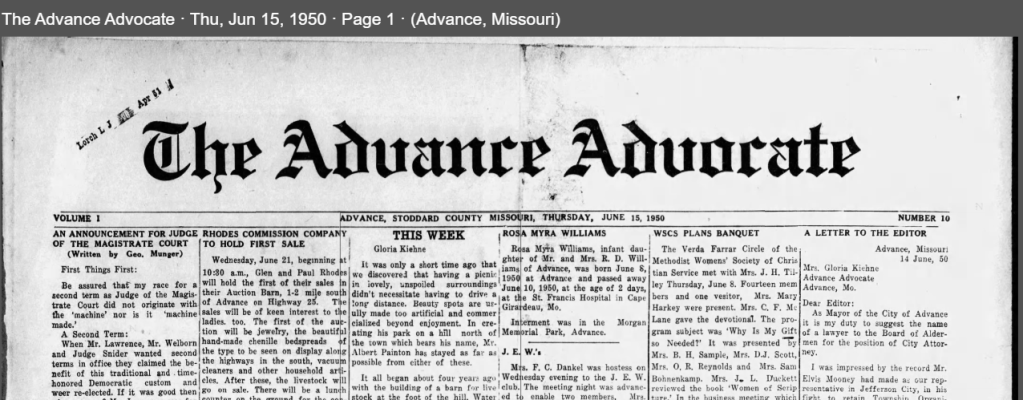
In my previous post I transcribed a lengthy feature article about Albert Painton’s “refuge” published on page 3 of the January 3, 1950, issue of the St. Louis Post-Dispatch. Combing through newspaper archives I found a local article published in the June 15, 1950, issue of the Advance Advocate [Advance, Missouri].
It was much the same as the Post-Dispatch article, whereas the Post-Dispatch article mentioned Mr. Painton informing a trapper that if a Fox that was in question, left the refuge it was fair game to the trapper but until then said fox was off limits. The Advance Advocate article cites that the same ultimatum was issued to a coon hunter. The article also mentioned that Mr. and Mrs. Painton bottle-fed two orphaned two baby raccoons and later released them when they were grown. One remained tame for at least one summer and would greet visitors to his park at the lake. The article goes into greater detail on how Mr. Painton created the lake and the park, and it is rather remarkable that a gentleman in his 70’s performed all of the painstaking labor himself to create it. I can confirm that the author of the article, Gloria Kiehne was correct about the view from the top of Mr. Painton’s hill. – Editor
It was only a short time ago that we discovered that having a picnic in lovely, unspoiled surroundings didn’t necessitate having to drive a long distance. Beauty spots are usually made too artificial and commercialized beyond enjoyment. In creating his park on a hill north of the town, which bears his name, Mr. Albert Painton has stayed away as possible from either of these.
It all began about four years ago with the building of a barn for livestock at the foot of the hill. Water stood over some of the land at that time until too late in the Spring for cultivation. Mr. Painton decided the best course of action was to drain the water into one large pond. The idea of fish in the pond soon followed. This was the groundwork for the park.
After that the need for a game refuge presented itself. Mr. Painton is a strong believer in clean fence rows, and while this added much to the appearance of a farm, it provides no cover for birds and small game. So the hill was to become their home. The timber on the hill was in a bad was because the water from the rainfall ran off too fast. The next step was to fence the entire area and terrace the hill. A stone wall was added to the hill side of the pond to hold the soil.
The landscaping was done by Mr. Painton, who planted the trees how he saw fit.He has a variety native of this part of the country and has an orchard of peach, cherry and plum between the terraces. There are no tame flowers there as he wished to avoid any man-made look, but wild iris, sweet williams, larkspur and columbine are abundant, and other wildflowers are getting a start. Last year several Hawthornes were planted, but although great care was exercised only a few survived.
Of course, no hunting or trapping is permitted, and this has given rise to at least one amusing incident. Mr. Painton has occasion to warn a couple of men about this restriction. They assured him that there was at least one big coon which came down from the hill and went over to a small streamed flat, and that they had traps set for him there. Mr. Painton replied: “That’s alright but as long as he is inside that fence, he is my coon and you let him alone.”
Mrs. Painton once raised on a bottle two small coons whose mother had somehow been killed. When they were old enough, they were set free on the hill. One of them remained quite tame and delighted picnickers throughout the summer by coming up to their tables and accepting food.
When the woods were cleared of limbs after the sleet storm last winter, Mr. Painton had them sawed into firewood and stacked for the convenience of those using the park. He charges no admission and gives permission freely, asking only that it not be abused. He has little trouble, since most people consider it a privilege to be able to enjoy such a grand place.
We were there early in the spring, and it was beautiful. The view from the hilltop is magnificent, but you had better take it slow getting to the top to really enjoy it. Where we went up it’s as nearly vertical as any mountain climber could wish. The smokestack from the cement plant in Cape Girardeau is visible, and other objects equally far away show up clearly.
Support Foothills Media by ordering your copy of “Blood in the Ozarks”
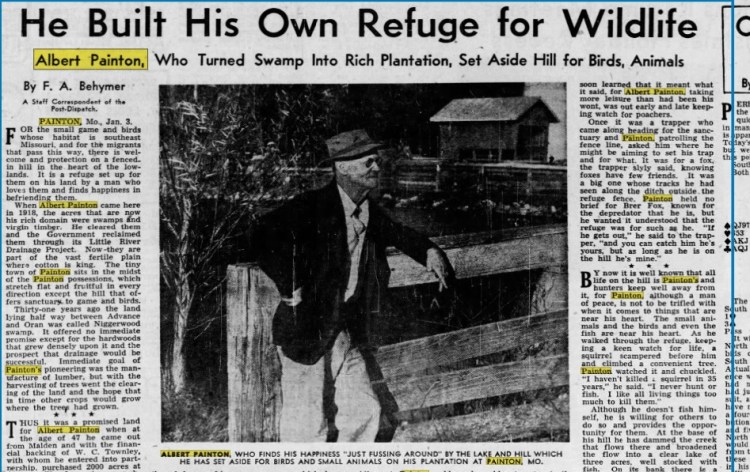
Feature article about Albert Painton from the Jan 3, 1950 St. Louis Post-Dispatch
I’ve been doing a bit of newspaper archive “treasure hunting” lately and I stumbled upon an article of particular interest to me. The article appeared in the January 3, 1950 St. Louis Post-Dispatch newspaper on page 3 and titled “He Built His Own Refuge for Wildlife: Albert Painton Who Turned Swamp into Rich Plantation, Set Aside Hill for Birds and Animals”.
I grew up in the town of Painton. Well, by that time it was more of a “village” of about 50 people, but we still had a gas station and an airport (which featured air shows in my early days).
My father worked for the (then Cotton Belt Railroad), which later got absorbed by the Southern Pacific, which later got absorbed by the Union Pacific, which is currently trying to absorb the Norfolk Southern railroad (somebody make the merger craziness stop!).
The old store building mentioned in the article was still standing, as was the old schoolhouse. The lake and “refuge” mentioned in the article came to be known as “Painton Pond”. It was generally still open to all as long as permission was obtained. It was a favorite destination for my friends and I for camping and fishing when we were kids and was easily accessible via a quick bicycle ride.
One thing I’ve noticed while digging through old archives is that in the “old days” Southeast Missouri was often described as the South, and there were many mentions of plantations, (cotton was more prevalent in those days). I can’t help it if you don’t think so, I deal in facts.
Below is the article, which I have transcribed for your reading pleasure (for those who still read):
For the small game and birds whose habitat is southeast Missouri, and for the migrants who pass this way, there is welcome and protection on a fenced in hill in the heart of the low-lands. It is a refuge set up for him on his land by a man who loves them and finds happiness in befriending them.
When Albert Painton came here in 1918 , the acres that are now his rich domain were swamps and virgin timber. He cleared them and the government reclaimed them through its Little River Drainage Project. Now they are part of the vast fertile plain where cotton is king. The tiny town of Painton sits in the midst of the Painton possessions, which stretch flat and fruitful in every direction except the hill that offers sanctuary to game and birds.
Thirty-one years ago, the land lying halfwaybetween Advance and Oran was called Niggerwood swamp. It offered no immediate promise except for the hardwoods that grew densely upon it and the prospect that drainage would be successful. Immediate goal of Painton’s pioneering was the manufacture of lumber, but with the harvesting of trees went the clearing of the land and the hope that in time other crops would grow where the trees had grown.
Thus it was a promised land for Albert Painton when at the age of 47 he came out from Malden and with the financial backing of W.C. Townley, with whom he entered into partnership, purchased 2000 acres at the prevailing low prices of public lands. Into the swamp he plunged, made there a home for his family and laid the foundation for the fortune that in the years to come he would win.
In the course of time the Painton enterprise became a family affair, for Painton the pioneer was fortunate in his children, two boys and four girls, all but one of whom have been and continue to be actively associated with him in the clearing and development of the land and his associated projects that were built up after he took over the interest of his partner.
The swamp when he came was alive with the game of the region that found dry footing on his 40-acre hill when the waters covered the land, and the birds were many in the treetops.In the small creatures and flocks he found companionship, and it was never his wish to destroy them. They were welcome to take forage from his forest and find refuge on his hill. They were not less welcome when the forest gave way to tilled filled and they fed upon his crops.
What was forest and swamp when the Painton’s came is a great plantation now, enlarged to 2,680 acres, crisscrossed with drainage ditches, where cotton, corn, soybeans and clover grow and herds of cattle and droves of hogs fatten. In the pastures are 80 Angus cows and in the fields there are 400 hogs all the time.
In the little town where the Painton’s live and which bears their name there is the Painton store that was set up to serve the needs of the timber cutters and has continued to supply the Painton tenants and their neighbors. In the store is the post office which Albert Painton served as the Postmaster for 20 yearsuntil he was retired at the age of 70. The post office is now in charge of his son-in-law L.E. Jefferies. One of his sons is the rural mail carrier for the area.
Painton and his children are content to cultivate about 1000 acres. The rest of the land is tilled by 10 tenants. Painton buys grain from other farmers and ships it out over the Cotton Belt, which has a siding at Painton station.
It is a matter of regret to Albert Painton that there is no school or church in the town of Painton, though the district school is not far away and churches are not too distant. When he came Painton felt an obligation to provide a church for his workers and others and built one near the store but there was not enough interest in it. In time it fell into disuse and was torn down.
All through the years when the Painton’s were redeeming the land and putting it to good uses , the 40-acre hill stood there in the midst of all their holdings, rock-ribbed, a geological upthrust of an ancient time, in a flat and rockless land serving no purpose except for sparse and casual pasturage.
Even that was poor use to make of it, as Painton came to realize, for the young trees were killed by the foraging animals and erosion set in. He decided that timber growth would be more profitable and would put a stop to the erosion.
Then, four years ago, it came to him that there was one good use to be made of it. It could be a refuge for small animals, as it had been when there was water over the land, and coverage for birds in need of it since the trees were leveled and even the fence rows of the latter time had been cleared by efficient farming.
No sooner though than done, Painton’s hill was named a game reserve, and a fence was put around it to make it stick against marauding stock and trespassing hunters. The invitation was to all wild things, squirrels, rabbits, raccoons, woodchucks, opossums and even foxes.For although foxes have their faults there was no way to exclude them without restricting the hill’s hospitality, and Painton didn’t want to do that. As for the birds, the refuge was theirs too, to be used accordingly to their need, particularly quail, whose lot it is to be hunted.
“No hunting” was the sign posted on the fence and hunters soon learned that it meant what it said, for Albert Painton, taking more leisure than had been his want, was out early and late keeping watch for poachers.
Once it was a trapper who came along heading for the sanctuary and Painton, patrolling the fenceline, asked him where he might be aiming to set his trap and for what. It was for a fox, the trapper slyly said, knowing that foxes have few friends. It was a big one whose tracks he’d seen along the ditch outside the refuge fence. Painton held no beef for Brer Fox, known for the depredator that he is, but he wanted it understood that the refuge was for such as he. “If he gets out,” he said to the trapper, “and you can catch him, he’s yours, but as long as he is on the hill, he’s mine.”
By now it is well known that all life on the hill is Painton’s and hunters keep well away for it, for Painton, although a man of peace, is not to be trifled with when it comes to things that are near his heart. The small animals and the birds and even the fish are near his heart. As he walked through the refuge, keeping a keen watch for life, a squirrel scampered before him and climbed a convenient tree. Painton watched it and chuckled. “I haven’t killed a squirrel in 35 years,” he said. “I never hunt or fish. I like all living things too much to kill them.”
Although he doesn’t fish himself, he is willing for others to do so and provides the opportunity to them. At the base of his hill, he has damned the creek that flows through there and broadened the flow into a clear lake of three acres, well stocked with fish. On its bank there is a park that is free to all who care to come. When they come they are likely to find him there, fussing around, as he says, with the things he likes to do.
Albert Painton is 78 now and he feels he has the right to fuss around, if he feels like it, with the things that he likes to do. Some men, when they have time for it, go to town and loaf around there, but that wouldn’t be any fun for Painton. Out there at his game refuge there is something to occupy his mind.
The hill and the lake that lies near it mean more to him than his many acres. His private park that is free to all is the apple of his eye. He leaves it to the boys to operate the farm and make the money and, shamelessly he admits, he spends it on his hill, his lake, and his park. And he says, “nobody in the world could get the thrill that I get.”
On the shore of his lake Albert Painton often stands where he was happiest, just fussing around with what he likes best to do. Behind him rises his hill, where the wild things are free and unafraid.
Support this website by purchasing “Blood in the Ozarks” by Clint Lacy
Since everyone else has written about this and weighed in on the subject in one form or another, I will try to keep this brief.
First of all, full disclosure, I stopped following the NFL years ago, about the time when political correctness found its way into the league. The “hands up don’t shoot era”, the “take a knee era” and the “black national anthem”. Too much for me. But the NFL decided to “one up” themselves this year when they decided that the entire Superbowl halftime show should be entirely in Spanish.
That’s why I was happy to see that TPUSA was going to offer up an alternative halftime show. I didn’t watch the Super Bowl, but I definitely tuned into what TPUSA was offering and they didn’t disappoint.
As it turns out, Brantley Gilbert, Gabby Barret, Lee Brice and Kid Rock, were just what America was looking for. According to pollster Frank Luntz, Bad Bunny’s halftime performance on YouTube drew 41.2 million viewers, while TPUSA and Kid Rock garnered 20.5 million.
Nearly 6 million viewers watched TPUSA’s halftime show in real time and that was 6 million people who DIDN’T watch the NFL’s offering of Bad Bunny. Further proof that the average American didn’t want Bad Bunny to begin with was found on the Apple Music Charts the next day when Kid Rock’s cover of ” ‘Til You Can’t” debuted at #1.
🚨 BREAKING: Kid Rock’s rendition of “‘Til You Can’t” with his added verse about giving your life to Jesus has SURPASSED Bad Bunny on the charts
I don’t see the NFL changing anytime soon, which is why I will continue to boycott it. I do however, hope that the TPUSA halftime show becomes an annual tradition.
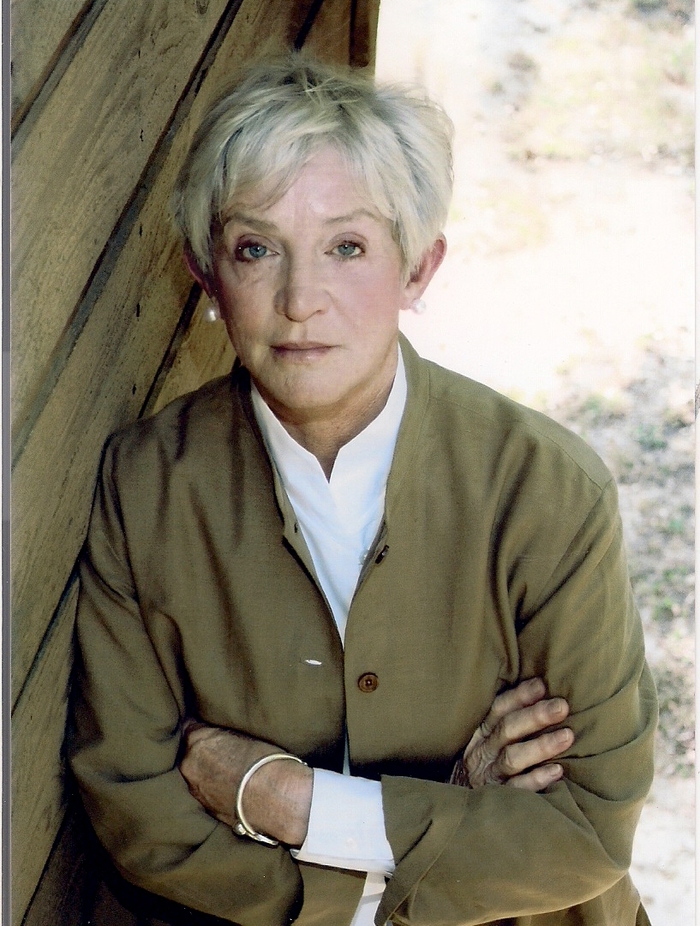
“Paulette Jiles, an award-winning and best-selling novelist and poet who spent the last 30-plus years living and writing in San Antonio and in the Texas Hill Country, died on July 8. She was 82.
Jiles said in her blog that she had been recently diagnosed with a form of non-alcoholic cirrhosis.
A Missouri native, Jiles lived in Canada for several years mainly as a poet and a reporter before returning to the United States where she married and moved to San Antonio and then the Hill Country to become a novelist. She sold more than 800,000 books across North America.”
The paper, in its obituary also stated:
“jiles produced her first novel, 2002’s Enemy Women, a Civil War-era piece that tells the story of a young woman who finds love and hope amid the carnage and betrayal that she and her family experience during the conflict.
Enemy Women won Jiles another Canadian literary award — the Atwood Gibson Writers’ Trust Fiction Prize.
The success of Enemy Women elevated Jiles’ writing career.”
Enemy Women just happened to be the novel that introduced me to Jiles’ writing, the novel was set in Southeast Missouri, an area in which I was born, raised and still reside today.
While Enemy Women brought great success, it also generated a fair amount of controversy as a Civil War massacre that took place on Christmas Day, 1863 was the focal point of it.
It was this controversy, and the personal attacks against Jiles that inspired me to write “Blood in the Ozarks”. I believed the massacre happened, I set out to prove it happened and I did just that.
During my writing of “Blood in the Ozarks” I began to correspond with Mrs. Jiles and we became “pen pals” of sorts. She began a tradition of sending me a signed copy of her latest novel whenever she finished on (along with a heartfelt note) which I will always treasure.
I communicated extensively when she was writing “Chenneville: A Novel of Murder, Loss, and Vengeance“ and before the book was released, she said she was going to send me an autographed, advanced copy (as was her tradition).
It never came, I got busy and didn’t ask her what happened. Partly because of my personal life and partly because I didn’t want to bother her. For whatever reason the thought crossed my mind today that maybe there was a reason I didn’t hear back from her. Curiosity got the best of me, I typed her name into a search engine, and my worst fears were confirmed. Paulette Jiles had left us.
I want to thank her for shining a spotlight on a part of the country in which the Civil War is rarely mentioned in mainstream circles. Paulette changed that along with inspiring me to write my first book.
What a news cycle this past week has been, beginning with the fatal shooting of activist Alex Pretti which occurred on January 24, 2026. As you might expect the response from the mainstream media was sympathetic with many news outlets defending his actions and proclaiming his innocence. Here are a few examples.
On January 25, 2026 CNBC reported the following under the headline “Videos of Alex Pretti shooting by federal agents in Minneapolis contradict Trump official claims”
“On Saturday, Alex Pretti, a 37-year-old intensive care unit nurse and U.S. citizen, was shot and killed by federal immigration agents in Minneapolis. There’s a wide gap between what Americans have seen of the shooting and what federal officials are telling them.
Soon after the shooting, Department of Homeland Security officials rushed to defend the officers involved, claiming the victim “approached U.S. Border Patrol officers with a 9 mm semi-automatic handgun” and that when federal agents attempted to disarm him, “the suspect violently resisted.”
CNBC claimed to “verify” all available videos from the shooting and concluded that:
“At no point in any of the three videos shown here does Alex Pretti brandish a weapon or appear to threaten federal immigration agents before the confrontation begins, as was claimed by DHS Secretary Noem and others in the Trump administration.
One video also appears to show a federal officer removing a weapon from Pretti while he’s being restrained by agents on the ground before any shots are fired.
Pretti is a lawful gun owner and owns a permit for his weapon.”
So suddenly the Liberal “left” who have spent years trying to implement gun control are suddenly pro-Second Amendment? Got it.
On January 25, 2026, USA Today reported under the headline “Who was Alex Pretti? Man killed by feds remembered as helper of people”, the news outlet many of those closest to Pretti. Among them were his sister:
“Micayla Pretti said in the statement that it was a “privilege” to be his sibling and said he “had a way of lighting up every room he walked into.”
“Through his work at the VA caring for the sickest patients, and passion to advance cancer research, he touched more lives than he probably ever realized,” she wrote. “My brother is, and always will be, my hero.”
In this CBS video that shows the shooting of Alex Pretti, the narrator describes him as an “observer”.
Celebrities, influencers actors and reporters made Alex Pretti the latest martyr in their fight against the Trump administration’s effort to deport violent illegal immigrants but as soon as the “left” uplifted Pretti a problem soon developed, another video emerged of Pretti embroiled in a previous confrontation with ICE agents.
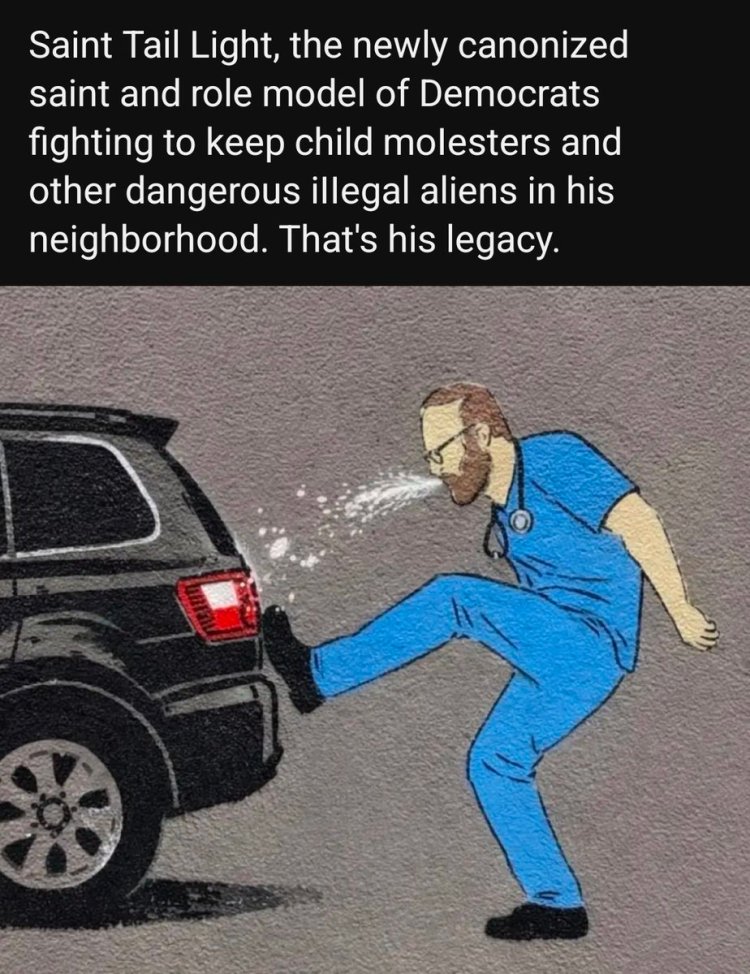
In the video, posted on January 27, 2026, by the 0Hour1 account, Alex Pretti can be seen in a confrontation with ICE weeks before he was shot. Pretti can be seen spitting on ICE agents, exclaiming “Assault me mother f*cker” and kicking the taillights out of an ICE vehicle.
As you might have noticed, this created a problem for the “left”, after all they had spent almost an entire week creating the narrative that Alex Pretti was a peaceful, caring “hero”.
What was their response to the damning new evidence? It was about what you would expect. Most were similar to what Keith Edwards posted on his X account on January 28th.
You kicked a car 11 days ago… the government must execute you now.
It doesn’t matter how much damaging evidence comes out blowing the left’s narrative of Alex Pretti out of the water, the “left” will just say “So what?”.
It also doesn’t matter because as of the time this story is published former CNN reporter Don Lemon was arrested for his part in the recent invasion of a Minnesota church.
🚨 BREAKING: Don Lemon could make his first court appearance as early as TODAY, as he’s now been arrested and taken into federal custody
And just like that, the “left” forgets about their “martyr” Alex Pretti.
Don Lemon is a journalist and has the right to cover the undeniably important news events in Minneapolis. Arresting him will not silence criticism of the federal government. Free Don Lemon.
The arrest of Don Lemon is textbook fascism—a brazen attempt to silence reporting on a criminal regime. Stand up for Don, because our rights stand and fall with those of courageous journalists throughout this country. pic.twitter.com/Lrm7rTqzKF
Literally all of the liberal influencers that were advocating for justice for Alex Pretti yesterday have abandoned him for the new cause of the very much alive Don Lemon today and in doing so it reveals their hypocrisy for despite their faux, steadfast dedication to “inclusivity” it certainly appears that Liberal-Gay-Black-Alive trumps Liberal-White-Dead.
Politics and the news have you down? Sit back and relax while you listen to my latest release “We Got A Good Thing” a musical tribute to the 1960’s and 1970’s.
It’s been a while since I have written a proper article, but recent events have inspired me to share some observations. However, I do need to note that one of the reasons that you have not seen a recent podcast or article from me is the fact that I have had three eye surgeries since October and am scheduled for a fourth next month. So I am depending on my “good eye” to accomplish this. If you spot any grammatical or spelling errors, please cut me a little slack (or not).
“This afternoon, Tim Walz called a press conference in which he threatened civil war. It was one of the most extraordinary performances by an American political leader since the Confederates seceded in 1861. Walz said that he had put the Minnesota National Guard on official notice of potential deployment. Deployment to do what? To fight ICE, federal law enforcement:
We have never seen anything like it, not just in Minnesota but anywhere in America, since the Civil War: a governor threatening to call out the National Guard to forcibly resist federal authority and prevent the enforcement of our national laws. George Wallace didn’t do that. Ross Barnett didn’t do that.
Walz can’t seriously think that the Minnesota National Guard can militarily resist federal authority. Federal forces are by no means limited to ICE: President Trump has clear legal authority to call out, for example, the 82nd Airborne to restore order in Minneapolis, if that is what it takes.”
Governor (and failed Vice-Presidential candidate) Tim Walz isn’t the only Liberal Minnesota politician to declare “States Rights”. On January 8th, 2026, CBS News reported :
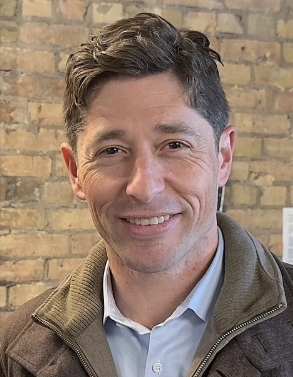
“Minneapolis Mayor Jacob Frey had a strongly worded message for federal immigration officials after an ICE officer shot and killed a 37-year-old woman on Wednesday: “Get the f*** out of Minneapolis.”
At a news conference after the shooting, Frey said, “We do not want you here. Your stated reason for being in this city is to create some kind of safety and you’re doing exactly the opposite.”
Of course, one could speculate that this faux outrage of ICE and the shooting of Renee Good provides a rather convenient distraction to the massive fraud (estimated at over $1 billion) in the state uncovered by independent reporter Nick Shirley.
As of the time of this writing, there has been another ICE involved shooting. This time a man armed with a 9mm pistol and extra ammunition tried to interfere with operations against ICE. According to FOX News:
“A Border Patrol member shot an armed individual in Minneapolis, Minn., on Saturday at the intersection of West 26th Street and Nicollet Ave., Fox News has learned.
The Department of Homeland Security (DHS) told Fox News that the suspect was armed with a gun and two magazines.
“At 9:05 AM CT, as DHS law enforcement officers were conducting a targeted operation in Minneapolis against an illegal alien wanted for violent assault, an individual approached US Border Patrol officers with a 9 mm semi-automatic handgun,” DHS said in a statement.”
Politicians like Governor Walz and Mayor Frey are nowhere to be found as they are more than content to inspire programmable liberals like Renee Good to run over an ICE agent, or the yet to be identified man who attacked ICE agents today.
It is clear that “States Rights” is their “War Cry” but the question that remains is on what grounds? For years the official mainstream narrative has been that the “Civil War” settled the issue of States Rights and that the Federal government reigns supreme. Information found on the tutorchase.com website gives the generally accepted view of the matter:
“The Civil War redefined federalism by solidifying the supremacy of the federal government over state governments.
The American Civil War, fought from 1861 to 1865, was a pivotal moment in the history of the United States. It was a conflict that was rooted in a fundamental disagreement over the nature of the Union and the balance of power between the federal government and the states. The outcome of the war had profound implications for the concept of federalism, which refers to the division of power between the national government and the individual states.
Before the Civil War, there was a significant debate over the concept of ‘states’ rights’. Many Southern states believed that they had the right to make their own decisions on key issues, most notably slavery, without interference from the federal government. This belief was a key factor in the decision of several Southern states to secede from the Union, leading to the outbreak of the Civil War.
The victory of the Union forces in the Civil War effectively settled this debate. The federal government demonstrated that it had the power to prevent states from seceding and to enforce its decisions on contentious issues. This was a significant shift in the balance of power in favour of the federal government.
The post-war amendments to the Constitution further reinforced this shift. The Thirteenth Amendment abolished slavery, the Fourteenth Amendment granted citizenship to all persons born or naturalised in the United States, including former slaves, and guaranteed equal protection under the law, and the Fifteenth Amendment granted African American men the right to vote. These amendments significantly expanded the power of the federal government and limited the rights of the states.
In the years following the Civil War, the federal government continued to assert its supremacy over the states in a variety of ways. For example, during the Reconstruction era, the federal government took unprecedented steps to rebuild the South and to protect the rights of newly freed slaves. This period saw a further expansion of federal power and a corresponding reduction in state autonomy.
In conclusion, the outcome of the Civil War fundamentally redefined federalism in the United States. It established the supremacy of the federal government over the states and set the stage for the expansion of federal power in the years to come.”
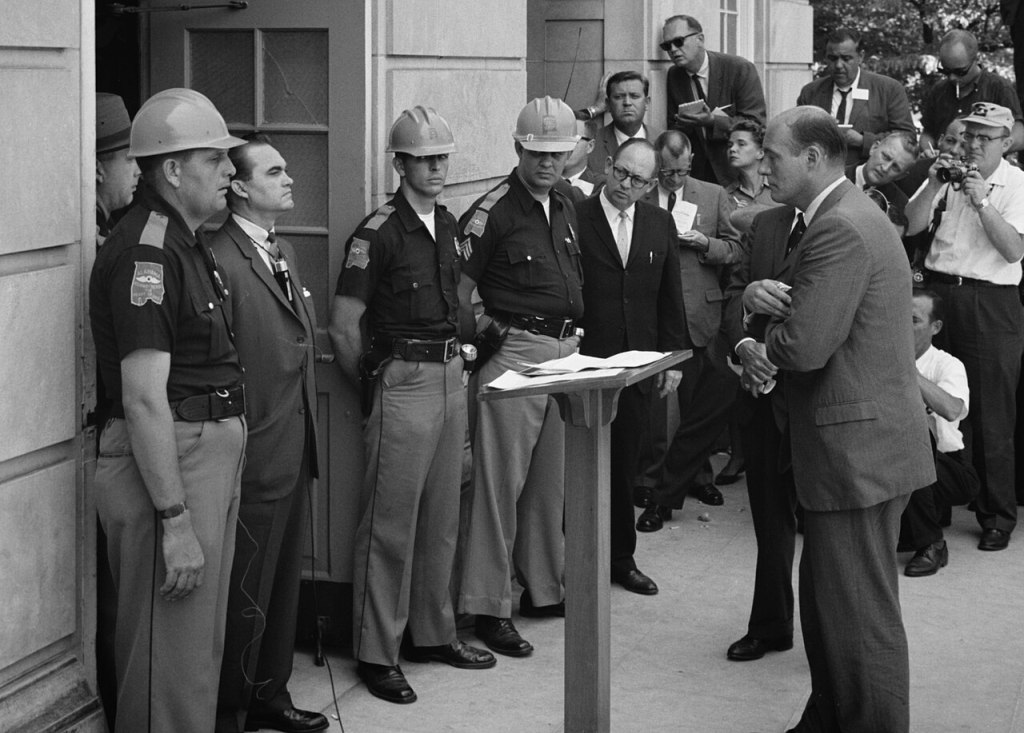
For years, decades even Liberal Democrats were happy to invoke this interpretation of Federalism. The same Liberals of today who say that President Trump has no authority to “federalize” the National Guard of “their” state are the same ones who celebrated the integration of the University of Alabama in June of 1963.
How did they forcefully integrate the University of Alabama? I’ll let Wikipedia do the explaining:
Apparently, they supported the federalization of the National Guard once again on March 20, 1965. An article published on the History.com website summarizes the story:
Intimidation and discrimination had earlier prevented Selma’s Black population—over half the city—from registering and voting. On Sunday, March 7, 1965, a group of 600 demonstrators marched on the capital city of Montgomery to protest this disenfranchisement and the earlier killing of a Black man, Jimmie Lee Jackson, by a state trooper.”
Still, all good, right? It’s always “all good” when it benefits Liberal causes. So why have Liberals who have supported “federalization” as a solution to resolve “equality” and “social issues” suddenly opposed to the concept of “federalization”? A quick AI search reveals that:
“Since President Biden took office in January 2021, an estimated 6 million or more unauthorized immigrants have entered the United States and taken up residence. This figure includes individuals who were released into the U.S. interior after being encountered by immigration authorities, as well as those who evaded detection”
Who do you think these people voted for? Who do you think is paying for their housing, their medical care, their food? Who do you think are coming up with the massive schemes to defraud the government through social “safety net” programs and why are the Democrats fighting so hard to protect them to the point that they incite insurrection and threaten Civil War?
Liberals have hailed “federalization” as a solution to every social cause from the end of the Civil War and now they do not like it when it threatens their voter schemes and kickbacks from defrauding the government.
My suggestion? Deal with it. Accept it. Live with it. You wanted it. You got it. You just don’t like it when it doesn’t benefit you.
I've always said Missouri has two seasons: Arctic & Rainforest. It was 74 degrees on Christmas Day. Today it is 8 degrees and they are calling for 8- 13 inches of snow. #Missouri#WinterStormpic.twitter.com/gZCdVzTgtx


 Foothills Media LLC